'There was a city': VR tour peers into Hiroshima's past / Photo: © AFP

 Former champ Rybakina crashes out at Wimbledon
 Mass protests in Germany fail to stop far-right AfD congress

 Ireland pip Australia 33-31 in Nations Championship nailbiter
 Antonelli edges Hamilton in sprint to extend title lead
 Rennie 'relief' as All Blacks tenure begins with narrow win over France

 Europe's baked rice bowl seeks escape from drought

 Ukraine says still fighting for eastern stronghold
 Mali hit by new wave of coordinated attacks
 New Zealand edge France 34-32 in thriller to open Nations Championship
 Pope defends migrants at Mediterranean island frontier

 Pope to defend migrants at Mediterranean island frontier
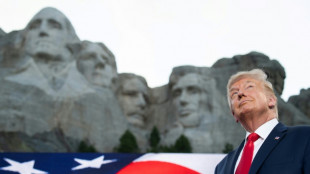
 US turns 250 as Trump warns of 'attack' on American identity
 Feels like 'victory': Cape Verde celebrates heroic World Cup defeat
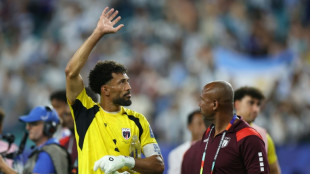 Haaland's stetson, Cape Verde's pride: World Cup last-32 moments
 Colombia overcome Ghana to reach World Cup last-16

 Cape Verde show anything is possible at World Cup with 'big hearts'
 Huge crowds gather as Khamenei funeral ceremonies open in Iran
 Mass protests expected as German far-right AfD meets

 Argentina survive Cape Verde scare to reach World Cup last 16

 England v Mexico World Cup game kickoff time unchanged: FIFA
 McDonald's, bus station convert into Venezuela quake clinics

 'Super typhoon' Bavi heads for US Pacific islands
 England seek end to Australia agony in Women's World Cup final
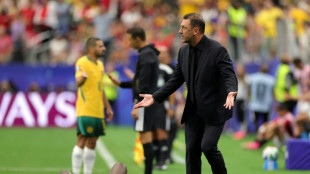
 President-elect Fujimori hails 'new chapter' for Peru

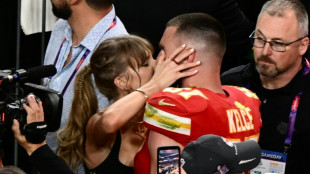 Global celebrities pay court at Swift, Kelce "royal wedding"

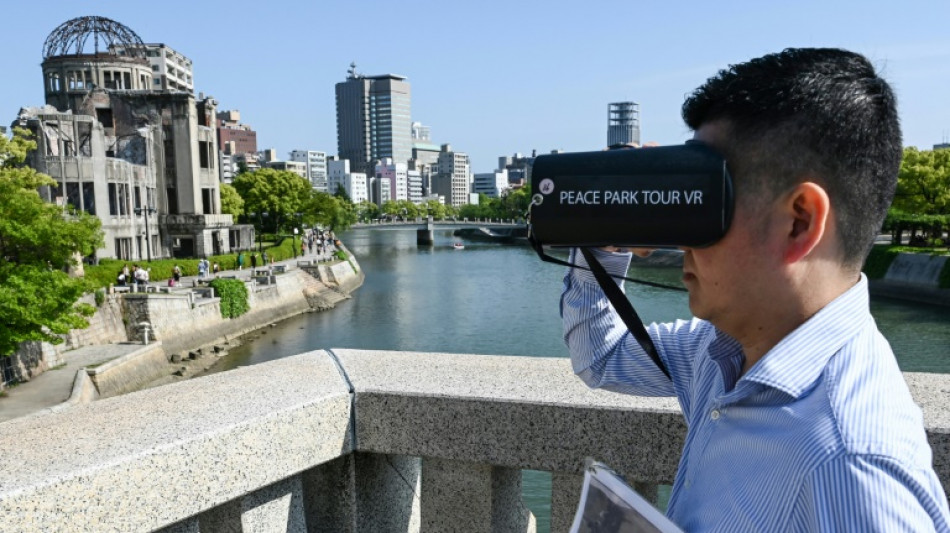
On a sunny street in Hiroshima, a tourist looks around, but instead of seeing a bustling riverside, they face a scene of horror, with burning bodies and rising flames.
What they are seeing is part of a virtual reality tour that allows people to experience the city as it was before, during and after the atomic bomb attack on August 6, 1945.
It can be a disconcerting experience, but Hiroshi Yamaguchi, whose company recently began offering the tours, believes it can help people better understand the impact of the nuclear attack as well as the city that existed before it.
"I think even some people who live in Hiroshima don't know that what is now the Peace Park used to be a proper town, where people were living," the 44-year-old told AFP.
"By seeing it not only in photography, but by also experiencing it immersively, it is easier to understand."
The tour begins at what is now the Hiroshima Park Rest House, which was being used by the fuel-rationing union at the time of the bomb attack.
It was just 170 metres (560 feet) from the hypocentre, and all but one of the 37 people in the building at the time were killed.
The sole survivor was in the basement when the bomb hit, and the tour is based in part on what he saw when he emerged to scenes that haunted him for the rest of his life.
Overall, around 140,000 people perished in the attack and its aftermath.
Yamaguchi's company Tabimachi Gate Hiroshima worked with archives from the city's Peace Memorial Museum, a local newspaper and the testimonies of survivors to create segments of VR imagery for five stops around the peace park.
Participants walk along a route carrying VR headsets that they put on at each stop, allowing them to experience the area as it was before the bomb, during the attack, and after reconstruction.
The tour, which lasts around one hour, with time afterwards for discussion, was launched in 2021.
- 'It was worse' -
Sergio Wang, a 64-year-old from Brazil who tried out the first stop this week, said he found it "impressive."
"When it starts, you have two people on the bridge and suddenly... the sound of the plane appears, and the flash, like the bomb explodes," he said.
"I think it's impressive for me because I didn't see anything like that (before) and you can see around, you can inspect what you want."
Megumi Tabuchi, a Hiroshima resident who moved to the city three years ago, said: "I was able to get a real sense of what it was like."
"It was vivid, with the people walking around," the 60-year-old added.
Yamaguchi said some have found the experience too immersive, and have broken downor stopped the tour.
But children, who are offered a different, sanitisedversion, often seem to connect better to VR than to static images of the past, he said.
Yamaguchi's company mostly focuses on other kinds of tourism, and the peace tour is something of a passion project for him as a descendant of hibakusha -- bomb survivors.
"I wanted to show that there was a before, that there was a city, that it was rebuilt by many people," he said.
Before he launched the tour, he asked Hiroshi Harada, a hibakusha and former director of the Hiroshima museum, to try it out.
Harada told him images could not capture something that stayed with him decades after he lived through the attack: the smell of human beings burning and decaying.
"He watched it and then said to me 'It wasn't like this. It was worse'."
J.Horn--BTB