Single women in Tunisia demand reproductive rights / Photo: ©

 Brewers rout Rays to reach brink of World Series sweep

 Mbappe dropped by Chinese brands for 'offending national sentiments'

 Kuwait exhibition presents Ukraine’s Islamic heritage and cultural ties

 Tech firms track Wall St rally on mixed day for Asian markets

 Jay-Z to perform at Super Bowl LXI halftime show: NFL

 Climate-threatened Fijian utopia rejects calls to relocate

 Israel to give verdict on Netanyahu in pivotal election

 $1m bounties, dawn arrests: Trump presses voter fraud campaign

 Gasping for air: Borneo residents struggle as island burns

 Doha exhibition charts a millennium of Chinese maritime ceramics trade

 New Zealand ex-PM Ardern to teach leadership in Sydney

 Ballon d'Or 'beyond wildest dreams' but Kane has plenty more to prove

 No envy, no secrets: How Spain's Gipuzkoa became football coaching hotbed

 South Korea economy grows three times faster than expected in Q3

 Al-Thawadi urges technology to deepen human connection through shared experiences

 Ballon d'Or: Harry Kane's crowning moment

 Harry Kane wins men's Ballon d'Or

 Lula win rattles Brazil markets over spending spree fears

 De la Fuente wins men's Ballon d'Or coach of year

 Trump slams 'rigged' Brazil election after ally loses to leftist Lula

 Nadal returns for Vegas hardcourt event

 Fainga'anuku named as loose forward for All Blacks northern tour

 Anthropic points to AI dangers, soaring sales in IPO filing

 Sinner to play rescheduled Saudi Six Kings in December

 Brazilian lawmaker Andre Janones, Lula's social media 'general'

A Tunisian singer's announcement that she would freeze her eggs in the hope of becoming a mother has provoked a heated debate on women's reproductive rights in the North African country.
Nermine Sfar, 31, appealed to her nearly one million Instagram followers to encourage other women who are studying and pursuing careers to freeze their eggs and preserve "the dream of becoming a mother".
Under Tunisian law, single women can only freeze their eggs if they are facing medical treatment, such as chemotherapy, "that could affect their ability to procreate".
The technique allows women to have eggs extracted, frozen and safely kept in liquid nitrogen, potentially getting pregnant with them years later.
Under the country's legislation from 2001, the eggs are stored for five years, renewable on the patient's request.
But the Tunisian law precludes the possibility of single women freezing eggs to delay pregnancy for social or career reasons.
According to Sfar's team, the singer does not fit the legal criteria in Tunisia and therefore cannot access the procedure -- along with many other single women in the country.
Sfar's post reignited a discussion over amending the law, with some responses suggesting that given Tunisia's deep economic and political crises since its 2011 revolt, the question of freezing eggs is of secondary importance.
But others said it was time to change the law and allow more women to benefit from the technique, in a country often seen as a pioneer for gender rights in the Arab world.
"In Tunisia, sadly there are brains and laws in deep-freeze," wrote one social media user.
- 'No logic' -
Nayma Chermiti, a television journalist, has been considering undergoing the procedure for two years, but says the law is getting in her way.
"I don't see any logic in this law," the 40-year-old told AFP.
"It excludes healthy, single women who have professional responsibilities or financial constraints that mean they put off getting married or having children."
She also criticises civil society for failing to push parliament to change a pre-revolution law that "doesn't correspond to the evolution of women and their responsibilities".
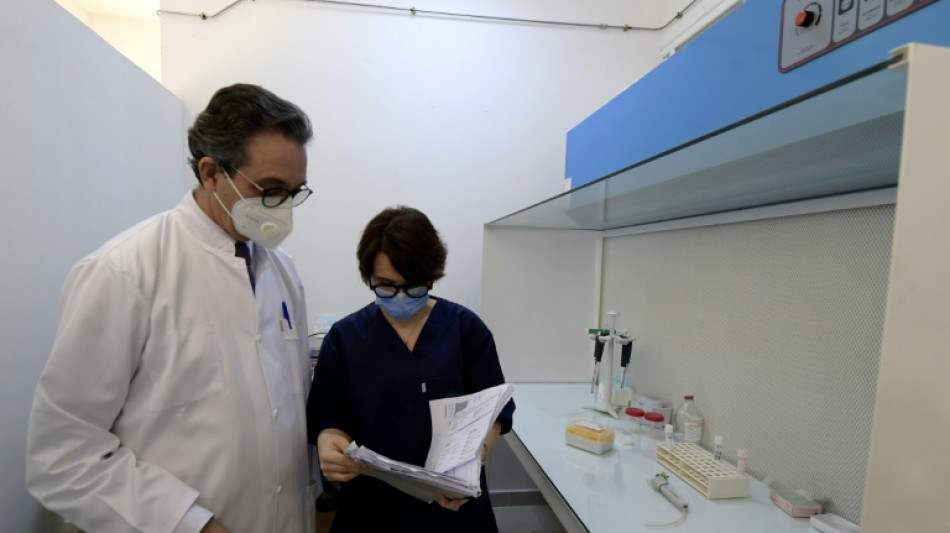
Doctor Fethi Zhiwa, head of the fertility clinic at Aziza Othmana hospital in Tunis, said young, single women enquired "practically every day" about freezing their eggs.
"This has surged in the last five years because of social evolution in Tunisia, where the average marriage age for women is now 33 years," he said.
This presents "a real problem", he added.
"There is a discrepancy between biological age -- which controls the age of reproduction -- and social age, which controls the evolution of careers," he said.
Zhiwa said about 80 percent of nearly 1,000 women who had frozen their eggs at the centre since 2014 were single.
The doctor was involved in drafting the law in 2001, 15 years after the first human birth from a previously frozen egg.
He said amending the law would be simple.
"There needs to be political will, particularly as there are no objections from religious clerics," he said.
"All they care about is ensuring there is no exchange or donation of gametes (eggs or sperm)."
- Civil society 'distracted' -
Zhiwa said the law was a "victim of its early approval", noting that when it was drafted, it was seen as being ahead of neighbouring countries.
Morocco waited until 2019 to adopt a law on medically assisted reproduction -- and only for married couples.
The kingdom does however allow single women to freeze their eggs when they are suffering from conditions such as cancer, said Jamal Fikri of the Moroccan College of Fertility.
In Algeria, only married women have access to such services, while in Libya, doctors say fertility treatment does not exist at all.
For Tunisian women's rights activist Yosra Frawes, Sfar's announcement "democratised a subject that used to be rarely discussed in Tunisia, because civil society was distracted by other issues".
"Thanks to social media, women have more freedom of speech," Frawes said.
"Subjects that used to be taboo are now being openly discussed."
D.Schneider--BTB