
As Spain advances trans rights, other early adopters hesitate / Photo: © AFP/File

 Young Canadians focus on mental health at key climate trial

 'Breath of fresh air' truce brings hope to Ukraine's ravaged Kherson

 British king reflects on colonial atrocities in Guyana

 Nations agree crucial texts in overtime at UN nature summit

 NBA Trail Blazers lose guard Morant for four weeks

 UN nature summit in extra time as nations grapple for deal
 Complaints upheld against Swiss TV commentary on Israeli bobsleigher

 Tielemans glad Man Utd sticking with Carrick

 Scottish police probe Andrew, Epstein stay at royal castle: UK media
 Medvedev into Vienna semis and books ATP Finals place
 UN nature talks in extra time as nations struggle to reach deal

 Meta settles, leaving Snap sole defendant in new social media trial

 Chelsea manager Alonso dismisses talk of Estevao loan deal

 Thousands of students, workers hold peaceful protests in Italy

 Iraola glad to raise Liverpool fans' hopes but says hard work ahead
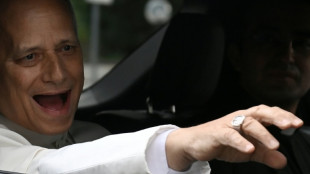 Pope Leo makes history with US midterm vote

 Arsenal boss Arteta fires 'Disneyland' warning at Dowman after Fleetwood red card

 Russia's ice hockey stars come in from the cold after CAS ruling

 Wall Street tech rout deepens on doubts over AI spending

 'Life in the old dog': German economy grows more than expected

 England great Anderson asks what's 'wrong with me?' after Lancashire exit

 Markets lashed by tech rout as earnings fan AI fears

 Germans to join Europe's youth protest wave

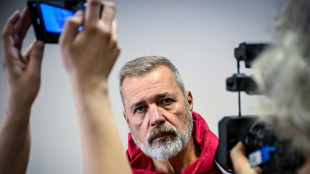 Novaya Gazeta closure part of Russia's 'giant military campaign': Muratov to AFP

 US oil giants report profit surge again on Iran war

As Spain prepares to adopt a law simplifying the process for self-identifying as transgender, other early adopters are applying the brakes over the complexities involved in this highly sensitive issue.
Spanish lawmakers gather Thursday to approve a transgender rights bill letting anyone 16 and over change gender on their ID card. That will make it one of the few nations to allow it with a simple declaration.
It is the final hurdle for legislation that has caused a major rift within Spain's fractious left-wing coalition, as the country gears up for a general election later this year.
Until now, adults in Spain could only request the change with a medical report attesting to gender dysphoria and proof of hormonal treatment for two years. Minors needed judicial authorisation.
The law set to be passed Thursday drops all such requirements, with anyone as young as 12 now able to apply, although only under certain conditions.
Supporters say the need for laws to safeguard trans rights has taken on a new urgency with the sharp rise in people reporting gender dysphoria -- the distress caused by a mismatch between a person's biological sex and the gender with which they identify.
- Politically divisive -
But in recent years, several European nations which pioneered transgender legislation have had second thoughts.
Among those who have reimposed restrictions are Sweden and Finland, while in the United Kingdom, Westminster last month blocked a Scottish trans rights law similar to Spain's.
The bitter dispute over transgender issues played a role in Wednesday's shock resignation of Scotland's First Minister Nicola Sturgeon.
Although she had championed the law, Sturgeon became entangled in a major row over transgender women entering all-female prisons following a rapist case that sparked public outcry.
A year ago, Sweden decided to halt hormone therapy for minors except in very rare cases.
In December, it limited mastectomies for girls wanting to transition to a research setting, citing the need for "caution".
The decision followed moves by Finland, which decided to restrict gender reassignment hormone treatment for similar reasons in 2020.
In Spain, the bill generated deep political and ideological divisions within its left-wing coalition government, driving a wedge between activists in its powerful feminist lobby and LGBTQ equality campaigners.
The law was championed by the equality ministry, held by the radical left-wing Podemos, which says it will "depathologise trans lives and guarantee trans people's rights".
- 'An important step' -
Campaigners said Spain was setting an example that would encourage others to follow suit.
"Spain is taking an important step with the approval of this law, because it will encourage other countries to follow our example that human rights must be above any ideology," said Uge Sangil, head of FELGBTI+, the largest LGBT organisation in Spain.
She dismissed the idea that other frontrunners were taking a step back from moves to advance trans rights.
"It's important to clarify that there is no backtracking, not in the UK, nor in Sweden," she said.
"In the UK there is a law but it's at a standstill, but they haven't gone back on it... and in Sweden, they are reforming the trans law to advance in rights."
But other voices have warned that gender self-determination could spell difficulties ahead that will need addressing. They include Reem Alsalem, the UN rapporteur on violence against women.
"Nations need to reflect on whether someone with a male biological sex, once they have acquired their female gender certificate, should be able to access all programmes and categories designed for biological women," she told El Mundo daily earlier this month.
Ahead of Scotland's vote, Alsalem wrote a strongly worded letter to the UK government outlining her concerns, which played a role in its unprecedented veto of the Scottish law.
At Thursday's session, Spanish lawmakers will also pass another law bolstering access to abortion services in public hospitals, and allowing 16- and 17-year-olds to terminate a pregnancy without parental consent.
It will also grant paid medical leave to women suffering from severe period pain.
D.Schneider--BTB