California downpours won't fix decades of drought: scientists / Photo: © AFP

 Russian strikes kill 18 in Kyiv region on eve of NATO summit

 Netflix, Disney+, Amazon appeal French investment rules

 Thousands flee new wave of European wildfires

 Norway releases first image of crown princess after lung transplant

 Stock markets diverge as tech recovery stutters

 Springboks recall Papier and make 10 changes for Scotland Test

 Indonesia, Singapore say key oil passage will remain 'accessible'

 USA face Belgium and World Cup date with destiny after Trump intervention

 Oldest quasars ever discovered add to 'perplexing' space mystery

 German factory orders unexpectedly rebound in May
 Russian strike kills 14 around Kyiv on eve of NATO summit

 USA face Belgium and World Cup date with destiny after Balogun reprieve

 Immobilised by heatwave, handicapped man sues Austria in rights court
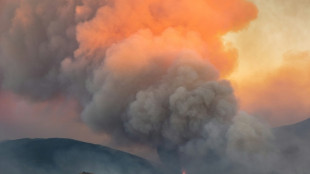
 Bellingham tells England to believe after Mexico masterclass

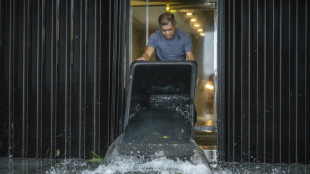 'Major' damage as super typhoon hits US islands

 Kane says England found a way to win

 England, Norway advance at World Cup, FIFA ruling triggers uproar

 Asian markets mixed as tech recovery stutters, oil slips

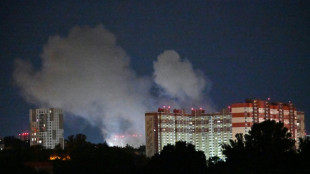 Russia launches deadly barrage on Kyiv region on eve of NATO summit

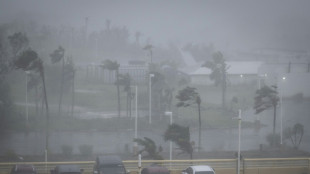 'Major' damage as Super Typhoon Bavi hits US island of Rota

 Australia signs defence alliance with Pacific nation Fiji

 Philippine Senate trial to decide VP Duterte's political future

 Australia PM apologises for Kylie Minogue comments

 Penalty save inspired Norway, says 'keeper Nyland
 As Venezuela quake deaths pass 3,000, attention turns to mourning, burials

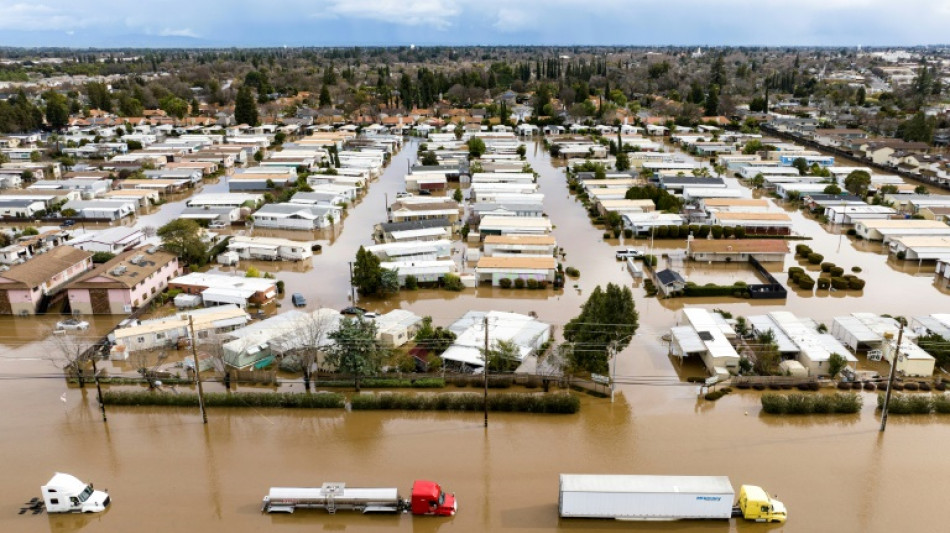
Near-record rainfall has battered California for weeks, sparking floods and landslides as the state struggles to cope with so much water.
But scientists say even this much precipitation won't reverse the western US state's decades-long drought.
A parade of atmospheric rivers -- massive flows of moisture dragged through the skies from the oceans -- has unleashed staggering volumes of rain and snow since December.
San Francisco got more rain in the last two weeks than it has done in any similar period for 150 years, while the Sierra Nevada mountains have been buried in as much as 33 feet (10.5 meters) of snow.
Peter Gleick, co-founder of the Pacific Institute in Oakland, a research organization that specializes in water issues, says it's difficult to quantify exactly how much water has fallen from the sky.
"But we're definitely talking about trillions of gallons (liters)," he told AFP.
"There's no doubt that the water we're getting now is a great help in eliminating the drought... But it is too soon to say that the drought is over."
"2023 could be a wetter year than normal," he said, but we'll have to wait until the end of winter to know for sure.
The western United States is in its 23rd year of drought, with major rivers and reservoirs at a fraction of capacity.
California's largest reservoir, Lake Shashta, is only 42 percent full, official data shows, even after all this rain.
The monster snowpack in the Sierra Nevada mountains -- it is currently twice what it normally is in January -- is most helpful, because this provides the gradual run-off that drip-feeds reservoirs in drier months.
- Aquifers in deficit -
Beyond its reservoirs and snow reserves, the state faces a much deeper-seated problem with its depleted groundwater, says Nicholas Pinter, a geologist from University of California, Davis.
About half of measured wells in California have seen their water levels decline over the past 20 years, according to a report from the California Natural Resources Agency released in October.
And the torrents of rain that have fallen are not all that effective at recharging them -- the soil became saturated quickly, so instead of being absorbed, subsequent downpours just ran off.
"Groundwater is like our retirement account. It's slow to go in and we have to withdraw it very, very carefully," says Pinter.
"Only, a lot of California water users draw on that retirement account like if it was the savings for tomorrow."
California's vast agricultural sector -- which supplies a swathe of America's supermarkets -- is a heavy user of this underground water.
That intense need -- coupled with big cities like Los Angeles that have nowhere near enough of their own water to support their populations -- means almost no matter how much it rains, it will not be enough.
"We will never end the discussion of drought in California because drought in California is largely driven by water demand," says Pinter.
- Climate change -
Human-caused climate change is already making itself felt, with average global temperatures up 1.2C since pre-industrial times.
That contributes to longer term trends like the drought, as well as to the increasing ferocity of winter storms like those that are whipping the western US coast now.
Adapting to the climate that we have altered is going to be key, says Gleick.
That includes learning how to retain the water when it falls as rain, to tide us through the hotter, drier summers.
"California built levees to protect communities from flooding, but they prevent the aquifers from recharging," he said.
"Every major river would benefit from widening the floodplains, by moving the levees back from the river and letting the rivers flood more.
"Instead of thinking we can control all floods, we have to learn to live with them."
Crucially, that means not assuming we can just go back to the way things were before a disaster struck.
"When communities are hit by repeated flooding, we should not rebuild in the same place," he said.
O.Bulka--BTB