-
 England Rugby League World Cup hopes hang by a thread
-
St. Louis City's unbeaten MLS run ends at 19, Union's reaches 15

-
 Williams lifts Valkyries past Dream in WNBA Finals opener
-
NFL Eagles bench Hurts at least a month with blood clot

-
 Dubois destroys Wardley to retain WBO heavyweight crown
-
Across US, 'No Kings' events seek to boost early voting

-
 Oregon families grapple with explaining school shooting to children
-
Tents spring up in Lisbon as Portugal housing protests spread

-
 Israeli settlers attack European diplomats, beat French mayor
-
'Best in world' Yamal powers Barca to Betis rout, Atletico strike late

-
 Town hall in Limoges 'largely lost' to blaze set during French protests
-
El Salvador's Bukele puts conditions on early release of gang prisoners

-
 US goes on the offensive in central Asia
-
Fire rages at town hall in France's Limoges after protests: authorities

-
 Emotional Lions come up short in Champions Cup as tributes paid to Andrews
-
Unstoppable Barca thrash Betis to extend perfect start

-
 Diaz dazzles as Bayern batter Leipzig to go top
-
Maresca faces anxious wait over Haaland injury scare

-
 Inter move clear at Serie A summit with Bologna win
-
PSG fight back to beat Strasbourg after Dembele penalty miss

-
 Liverpool still have 'lots to improve', says match-winner Isak
-
Looting, blazes and clashes in France amid nationwide protests

-
 Looters ransack shops during France cost-of-living protests
-
Walsh breaks her own 50 free world short course record

-
 Leinster thump Clermont as grieving Lions set for Champions Cup debut
-
Haaland brace extends Man City's winning start in Premier League

-
 Haaland stars in Man City win, Liverpool beat Brentford
-
'Special' Ombudsman storms to victory in Champion Stakes

-
 Dortmund go top despite Union Berlin stalemate
-
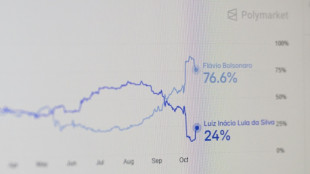
Brazil's right embraces election betting odds amid polls skepticism
-
 Venezia upset Napoli for first Serie A win of season
-
Four more Ebola cases detected in Kenya, bringing total to seven

-
 Glasgow and Bulls win as grieving Lions set for Champions Cup debut
-
Clashes erupt in France as protesters vow to make government 'tremble'

-
 Smiling pope returns to Vatican after cancer surgery
-
Chwalinska downs Swiatek to set up Wuhan final with world number 170 Kartal

-
 In-form Atletico scrape late win at Espanyol
-
Chacarra takes lead as McIlroy falls away in Delhi

-
 Rabada returns as S.Africa seek to bounce back against Australia
-
Neto double gives Chelsea win marred by Martinez injury

-
 Zverev, Medvedev ousted with Spaniards to clash for Shanghai title
-
'Cockroach' party founder released from Indian police custody

-
 French protesters clash with police during nationwide demonstrations
-
Nepal floods 'defining moment' for climate action: UN

-
 Zelensky says Trump could lift more Russia sanctions
-
Albanian capital sees fifth straight day of violent clashes

-
 Jayawardene quits as coach of five-time IPL winners Mumbai
-
Leaders weigh 'huge benefit', risks of AI for global economy

-
 World number 170 Kartal battles past Ostapenko to reach Wuhan final
-
Zverev stunned by Davidovich Fokina in Shanghai semi-finals

Meta's announcements and digital services?
Recent announcements by Meta, the technology conglomerate formerly known as Facebook, are raising questions about compliance with new and upcoming European digital regulations. In particular, critics argue that Meta’s proposed changes—ranging from expanded encryption options to the way it handles user data—could conflict with the European Union’s (EU) Digital Services Act (DSA).
The Digital Services Act is part of the EU’s broader effort to modernize internet governance, alongside the Digital Markets Act (DMA) and other legislation.
The DSA aims to:
- Increase Transparency: Large online platforms must disclose how their algorithms rank content and ads.
- Enhance Accountability: Platforms must tackle illegal or harmful content promptly, and offer clear mechanisms for users to report it.
- Protect User Rights: Users should be able to appeal content takedowns and have better insight into how and why posts are removed or demoted.
These rules place heightened responsibilities on big tech companies—those classified as “very large online platforms” with tens of millions of European users.
Meta’s Recent Announcements:
Over the past few months, Meta has shared several updates about its business strategy and platform operations, including:
- Increased End-to-End Encryption: Meta plans to make messaging on Facebook Messenger, Instagram, and WhatsApp more robustly encrypted.
- Data Collection and Personalization: Meta continues to prioritize data-driven ad targeting, which remains a central component of its revenue model.
- Content Moderation Tools: The company has signaled new automated detection systems to handle harmful content.
At first glance, these moves might appear aligned with a more privacy-focused approach. However, some experts contend that the heightened encryption and ongoing data collection practices might not fully align with the EU’s expectations for transparency, oversight, and user empowerment.
Potential Areas of Conflict
Algorithmic Transparency:
The DSA requires large platforms to provide clearer information on how content is promoted or suppressed. Critics say Meta’s push toward deeper encryption and minimal disclosure about proprietary ranking algorithms may hinder third-party audits.
User Rights and Appeals:
With increased automation in content moderation, users must have meaningful ways to appeal decisions. Observers note that Meta’s announcements have not specified whether appeals processes will be enhanced alongside new AI-driven moderation systems.
Data Governance and Consent:
Meta’s continued reliance on personalized advertising could come under scrutiny if user data is processed in ways that the DSA considers insufficiently transparent. The EU seeks stronger user consent mechanisms and clearer data usage disclosures, which might push Meta to adjust its business model in Europe.
Regulatory and Public Reactions
EU Officials:
While no formal statement has condemned Meta’s announcements outright, policymakers in Brussels remind all major platforms that “partial compliance” will not be enough under the DSA. Fines for non-compliance can reach up to 6% of a company’s global annual revenue.
Digital Rights Advocates:
Several advocacy groups argue that fully end-to-end-encrypted messaging, while privacy-enhancing, should not exempt a platform from accountability measures. They urge Meta to release more details about how it will reconcile encryption with obligations to remove illegal content.
Meta’s Response:
Thus far, Meta has reiterated its commitment to meeting the “highest regulatory standards” in Europe, pointing to ongoing investments in safety, content moderation, and user privacy. However, no specific roadmap for DSA compliance has been published.
What Lies Ahead:
As the DSA comes fully into force, large platforms like Meta will be closely monitored for breaches. A key question is whether Meta can strike a balance between encryption, monetization via targeted ads, and the new transparency and accountability requirements. Failure to do so could result in hefty fines or even a partial suspension of services within the EU.
Ultimately, the coming months will reveal how Meta’s strategies align—or clash—with Europe’s digital vision. If Meta can demonstrate robust compliance and meaningful user protections, it may preserve its market stronghold. If not, a confrontation with Brussels seems inevitable. Either way, the outcome will have sweeping implications for how major tech firms operate under a stricter European regulatory regime.

Cuba's hunger Crisis deepens

Poland trusts only hard Power

Tanks in Gaza - Hopes dim?

Rare Earth Standoff

Why Russia can’t end war

Israel: Economy on the edge

Gaza on the cusp of civil war

The Fall of South Korea?

A new vision for Japan

Pension crisis engulfs France

Miracle in Germany: VW soars