
-
 St. Louis City's unbeaten MLS run ends at 19, Union's reaches 15
-
Williams lifts Valkyries past Dream in WNBA Finals opener

-
 NFL Eagles bench Hurts at least a month with blood clot
-
Dubois destroys Wardley to retain WBO heavyweight crown

-
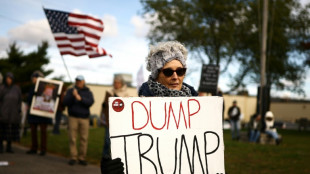 Across US, 'No Kings' events seek to boost early voting
-
Oregon families grapple with explaining school shooting to children

-
 Tents spring up in Lisbon as Portugal housing protests spread
-
Israeli settlers attack European diplomats, beat French mayor

-
 'Best in world' Yamal powers Barca to Betis rout, Atletico strike late
-
Town hall in Limoges 'largely lost' to blaze set during French protests

-
 El Salvador's Bukele puts conditions on early release of gang prisoners
-
US goes on the offensive in central Asia
-
 Fire rages at town hall in France's Limoges after protests: authorities
-
Emotional Lions come up short in Champions Cup as tributes paid to Andrews

-
 Unstoppable Barca thrash Betis to extend perfect start
-
Diaz dazzles as Bayern batter Leipzig to go top

-
 Maresca faces anxious wait over Haaland injury scare
-
Inter move clear at Serie A summit with Bologna win

-
 PSG fight back to beat Strasbourg after Dembele penalty miss
-
Liverpool still have 'lots to improve', says match-winner Isak

-
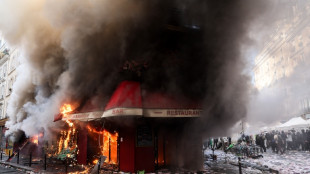 Looting, blazes and clashes in France amid nationwide protests
-
Looters ransack shops during France cost-of-living protests

-
 Walsh breaks her own 50 free world short course record
-
Leinster thump Clermont as grieving Lions set for Champions Cup debut

-
 Haaland brace extends Man City's winning start in Premier League
-
Haaland stars in Man City win, Liverpool beat Brentford

-
 'Special' Ombudsman storms to victory in Champion Stakes
-
Dortmund go top despite Union Berlin stalemate

-
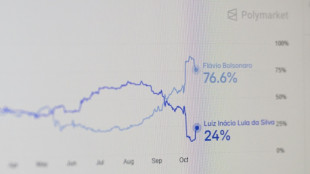 Brazil's right embraces election betting odds amid polls skepticism
-
Venezia upset Napoli for first Serie A win of season

-
 Four more Ebola cases detected in Kenya, bringing total to seven
-
Glasgow and Bulls win as grieving Lions set for Champions Cup debut

-
 Clashes erupt in France as protesters vow to make government 'tremble'
-
Smiling pope returns to Vatican after cancer surgery

-
 Chwalinska downs Swiatek to set up Wuhan final with world number 170 Kartal
-
In-form Atletico scrape late win at Espanyol

-
 Chacarra takes lead as McIlroy falls away in Delhi
-
Rabada returns as S.Africa seek to bounce back against Australia

-
 Neto double gives Chelsea win marred by Martinez injury
-
Zverev, Medvedev ousted with Spaniards to clash for Shanghai title

-
 'Cockroach' party founder released from Indian police custody
-
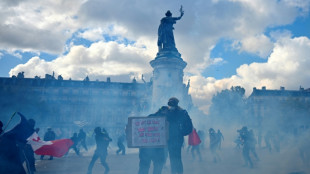
French protesters clash with police during nationwide demonstrations
-
 Nepal floods 'defining moment' for climate action: UN
-
Zelensky says Trump could lift more Russia sanctions

-
 Albanian capital sees fifth straight day of violent clashes
-
Jayawardene quits as coach of five-time IPL winners Mumbai

-
 Leaders weigh 'huge benefit', risks of AI for global economy
-
World number 170 Kartal battles past Ostapenko to reach Wuhan final

-
 Zverev stunned by Davidovich Fokina in Shanghai semi-finals
-
Pope to return to Vatican after cancer surgery

Bitcoin slump stirs doubt
The cryptocurrency that promised to replace central banks has just recorded the biggest single‐day drop in its history. In early February 2026, Bitcoin plummeted from around $72,000 to about $63,000 within hours, its sharpest one‑day fall since the November 2022 rout. According to exchange data, more than $1 billion in leveraged positions were liquidated during the plunge and roughly $2 trillion in crypto market value evaporated in the month leading up to the crash.
This freefall followed a record liquidation event in October 2025, when more than $19 billion worth of cryptocurrency bets were wiped out after U.S. trade tensions triggered panic selling. That 24‑hour wipeout was nine times larger than the February 2025 crash and dwarfed the FTX collapse. Bitcoin briefly dropped below $105,000 during the October chaos, and despite a partial recovery the seeds of doubt were sown.
Several factors converged to turn a routine correction into a historic rout:
Hawkish policy fears: Markets were rattled by expectations that U.S. monetary policy could tighten under a new Federal Reserve chair. Investors interpreted political appointments and hawkish rhetoric as a sign that money supply growth could slow, removing a key source of liquidity for speculative assets.
Leverage and liquidations: On‑chain data show a rapid unwinding of leverage. Futures open interest dropped from $61 billion to $49 billion within a week, a decline of more than 20 %. Analysts estimate that roughly $3–4 billion in positions were forcibly closed during the selloff.
Vanishing buyers: Unlike previous crashes triggered by a single news event, the 2026 decline was driven by a lack of demand. Market depth had fallen more than 30 % below its October peak, on par with the liquidity vacuum after the FTX collapse. Spot exchange‑traded funds bled billions of dollars as mainstream investors fled, and institutional treasuries eased purchases. A prolonged outflow of nearly $4 billion in the first five weeks of the year reversed the inflows that had fuelled the 2024 rally.
Changing narratives: Bitcoin’s reputation as “digital gold” took a hit. Despite geopolitical stress, currency weakness and violent swings in gold and silver, crypto prices failed to rally. As capital rotated into artificial‑intelligence stocks and precious metals, Bitcoin appeared to be yesterday’s story.
Policy shocks and tariffs: In October 2025 the U.S. administration imposed 100 % tariffs on Chinese imports. This sparked an exodus from risk assets, including cryptocurrencies, and set the stage for the later collapse. Analysts say the October crash cleaned out excessive leverage but left the market vulnerable.
Investor sentiment turns sour
Across forums and trading desks, the mood has shifted from bravado to resignation. Some investors derided Bitcoin as a “bubble” or compared it to imaginary game currency. Others likened the latest crash to gambling and warned that speculators would eventually be flushed out. Environmental concerns resurfaced; critics argued that mining costs now exceed the coin’s intrinsic value. The absence of dip‑buyers was notable: a culture that once rallied around “buy the dip” memes was strangely quiet.
Yet not everyone has given up. A cohort of long‑term believers view the drop as a chance to accumulate. They point to Bitcoin’s programmed scarcity and halving cycles and argue that regular dollar‑cost‑averaging has historically been rewarded. Indeed, after every bear‑market year since 2013, Bitcoin has staged a strong rebound: it rallied 35 % in 2015, 95 % in 2019 and 156 % in 2023. April tends to be a good month, with an average gain of 13 %, although there are no imminent halving‑driven catalysts until 2028. Some small investors are increasing their regular purchases during the downturn, betting that patience will pay off.
A crisis of confidence
The crash has amplified a broader crisis of confidence. Analysts note that Bitcoin is currently trading nearly three standard deviations below its 200‑day moving average, a level unseen in more than a decade. On 5 February the coin registered a −6.05σ move on a rate‑of‑change index, placing the drop among the fastest on record. Historical comparisons show that previous declines of this magnitude typically mark late‑stage stress, but they do not always signal a bottom.
Market depth remains thin, and liquidity contraction suggests that further downside is possible. Analysts warn that if prices continue to fall, miners could be forced to liquidate holdings to fund operations, potentially creating a vicious cycle. There is also renewed debate about the resilience of Bitcoin’s underlying technology: concerns about quantum‑computing threats and the energy cost of mining have resurfaced.
Looking ahead
Despite the gloom, some observers urge perspective. Bitcoin has survived multiple boom–bust cycles over its 17‑year existence, and each has ultimately attracted a broader base of users and infrastructure. The recent crash was driven by deleveraging rather than structural failure; 90‑day realised volatility remains well below levels seen in the 2022 bear market. Institutional adoption continues in areas such as stablecoins and tokenised assets, and on‑chain flows suggest that capital is rotating from smaller altcoins back into the flagship cryptocurrency.
Even so, recovery may be slow. Analysts at Kaiko estimate that crypto markets are only a quarter of the way through the current downcycle and expect it could take six to nine months before volumes and prices stabilise. Others caution that a new all‑time high may not arrive for several years. Until then, investors are left to decide whether Bitcoin’s historic crash is a buying opportunity or the beginning of a long slide into irrelevance.
| Metric | Value | Context |
|---|---|---|
| Lowest price during Feb 2026 crash | ≈$63,300 | Weakest level since Oct 2024 |
| One‑day price drop | ~12.6 % | Largest single‑day fall since Nov 2022 |
| Positions liquidated | >$1 billion | Forced liquidation in 24 hours |
| Market value lost | $2 trillion | Crypto market loss since Oct 2025 peak |
| Futures open interest decline | −20 % | From $61 B to $49 B in a week |
| January 2026 decline | −11 % | Fourth straight monthly loss, longest streak since 2018 |
| ETFs net outflows (early 2026) | ≈$4 billion | Reversal of 2024 inflows |
| Historic liquidations (Oct 2025) | >$19 billion | Largest crypto liquidation in history |
| Altcoin drawdowns during Oct 2025 crash | HYPE −54 %, DOGE −62 %, AVAX −70 % | Altcoins were hit harder than Bitcoin |

Strike fears rise over Iran

Japan’s right‑turn triumph

Is that Israel's final blow?

Calm or Chaos: Iran’s reach

Trump fears Asia's oil shock

Ultimatum Spurs Credit Panic

Israel’s Haredi Challenge

Israel: Economy on the edge

Rare Earth Standoff

Poland trusts only hard Power

How Swiss Stocks tamed Prices



