-
 Oregon families grapple with explaining school shooting to children
-
Tents spring up in Lisbon as Portugal housing protests spread

-
 Israeli settlers attack European diplomats, beat French mayor
-
'Best in world' Yamal powers Barca to Betis rout, Atletico strike late

-
 Town hall in Limoges 'largely lost' to blaze set during French protests
-
El Salvador's Bukele puts conditions on early release of gang prisoners

-
 US goes on the offensive in central Asia
-
Fire rages at town hall in France's Limoges after protests: authorities

-
 Emotional Lions come up short in Champions Cup as tributes paid to Andrews
-
Unstoppable Barca thrash Betis to extend perfect start

-
 Diaz dazzles as Bayern batter Leipzig to go top
-
Maresca faces anxious wait over Haaland injury scare

-
 Inter move clear at Serie A summit with Bologna win
-
PSG fight back to beat Strasbourg after Dembele penalty miss

-
 Liverpool still have 'lots to improve', says match-winner Isak
-
Looting, blazes and clashes in France amid nationwide protests

-
 Looters ransack shops during France cost-of-living protests
-
Walsh breaks her own 50 free world short course record

-
 Leinster thump Clermont as grieving Lions set for Champions Cup debut
-
Haaland brace extends Man City's winning start in Premier League

-
 Haaland stars in Man City win, Liverpool beat Brentford
-
'Special' Ombudsman storms to victory in Champion Stakes

-
 Dortmund go top despite Union Berlin stalemate
-
Brazil's right embraces election betting odds amid polls skepticism

-
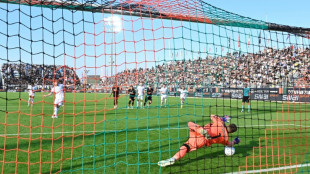 Venezia upset Napoli for first Serie A win of season
-
Four more Ebola cases detected in Kenya, bringing total to seven

-
 Glasgow and Bulls win as grieving Lions set for Champions Cup debut
-
Clashes erupt in France as protesters vow to make government 'tremble'

-
 Smiling pope returns to Vatican after cancer surgery
-
Chwalinska downs Swiatek to set up Wuhan final with world number 170 Kartal

-
 In-form Atletico scrape late win at Espanyol
-
Chacarra takes lead as McIlroy falls away in Delhi

-
 Rabada returns as S.Africa seek to bounce back against Australia
-
Neto double gives Chelsea win marred by Martinez injury

-
 Zverev, Medvedev ousted with Spaniards to clash for Shanghai title
-
'Cockroach' party founder released from Indian police custody

-
 French protesters clash with police during nationwide demonstrations
-
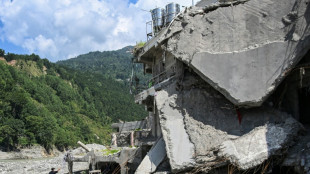
Nepal floods 'defining moment' for climate action: UN
-
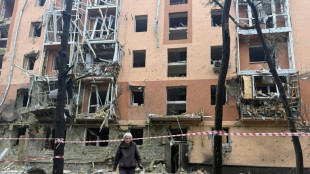 Zelensky says Trump could lift more Russia sanctions
-
Albanian capital sees fifth straight day of violent clashes

-
 Jayawardene quits as coach of five-time IPL winners Mumbai
-
Leaders weigh 'huge benefit', risks of AI for global economy

-
 World number 170 Kartal battles past Ostapenko to reach Wuhan final
-
Zverev stunned by Davidovich Fokina in Shanghai semi-finals

-
 Pope to return to Vatican after cancer surgery
-
France faces day of cost-of-living protests

-
 Haze triggers highest-level alert in parts of Southeast Asia
-
Zelensky says Trump waiving sanctions 'rewards' Putin, warns Moscow wants 'blackout' in Ukraine
-
 I'd have left Real Madrid if I were Vinicius, says Mourinho
-
Noosha Aubel: vezetői kudarc új kezdet helyett – alkalmas-e Potsdam polgármestere a tisztsége betöltésére?

Russia's Drone ploy in Poland
Poland’s downing of multiple Russian drones that violated its airspace in the night of September 9–10 was not a random spillover from the war in Ukraine. The scale, timing and flight profiles point to a deliberate probe designed to test NATO’s vigilance, rules of engagement and political cohesion — a calibrated move that stayed just below the threshold for a mutual‑defense response while forcing the Alliance to reveal parts of its playbook.
A multi‑hour incursion, met with allied force
Over several hours, Polish and allied aircraft intercepted and shot down drone‑type objects crossing into Polish territory from the east. It was the first time in the current war that a NATO member engaged and destroyed Russian assets over allied soil. Authorities temporarily shut parts of Poland’s airspace and closed several airports; damage on the ground was limited — including a residential house struck in the Lublin region — and no casualties were reported. Officials recorded at least 19 incursions.
Why the operation looks planned — not accidental
1) Synchronization with mass strikes on Ukraine
The crossings coincided with a large, coordinated Russian wave against Ukraine involving hundreds of drones alongside cruise and ballistic missiles. Pairing a cross‑border incursion with a high‑tempo strike package is consistent with a playbook aimed at saturating sensors, overloading command centers and creating ambiguity about intent. In such windows, “strays” can be plausibly denied even as they gather intelligence and trigger costly responses.
2) Routes that matter
Preliminary trajectory analysis noted flight paths consistent with probing Poland’s critical logistics chain — above all the Rzeszów hub through which military aid flows to Ukraine. Even a small number of slow, inexpensive aircraft can force high‑end assets into the air, compel temporary airport closures and expose the Alliance’s alert timeline and coordination procedures.
3) Use of low‑cost and decoy‑like systems
Polish officials identified at least some of the intruding airframes as long‑range, low‑cost drones of a type Russia has used extensively. Such platforms are ideal for reconnaissance by provocation: they can map radar coverage, provoke emissions from air‑defense radars and fighters, and stress decision‑making — all with negligible risk to Russian aircrews and minimal political cost if shot down.
4) Cover from neighboring exercises and electronic warfare narratives
The incursion occurred as Russia and its ally Belarus prepared major exercises. That backdrop provides plausible deniability and alternative explanations (“lost course,” “jamming effects”) even as it positions assets near NATO borders and normalizes unusual air activity.
5) Testing NATO’s political seams
Warsaw publicly rejected suggestions that the drones might have wandered into Poland “by mistake,” framing the event as deliberate. Differences in early public messaging among allies are analytically notable: they are exactly the fissures that probing operations seek to widen — without triggering Article 5.
The allied answer — and what it signals
Poland activated NATO consultations and, within forty‑eight hours, the Alliance announced Operation Eastern Sentry, a flexible, integrated air‑and‑ground posture along the eastern flank. Additional fighters, surveillance platforms and air‑defense units from several member states are being positioned to rotate and adapt along the border arc — an approach designed to keep adversaries guessing while tightening reaction loops.
Domestically, Poland imposed drone bans and restrictions on small aircraft in its eastern airspace and moved to harden critical nodes. Border measures with Belarus were stepped up. Internationally, an emergency session of the U.N. Security Council was convened at Warsaw’s request. European capitals summoned Russian envoys and signaled further steps on sanctions and air‑defense cooperation. Ukraine, with two years of hard‑won counter‑drone expertise, offered to deepen technical training ties with Poland.
Strategic takeaways
- Probing as doctrine. Russia’s war has demonstrated a systematic reliance on massed, low‑cost drones to saturate defenses, expose gaps and harvest targeting and EW data. Exporting that method into NATO airspace — in controlled doses — is a logical extension.
- Ambiguity as a weapon. Unarmed or lightly modified drones crossing borders create maximum political friction for minimum military risk. They pressure alliances to choose between escalation and restraint, while providing Moscow with deniability narratives.
- Deterrence requires tempo. The Alliance’s swift shoot‑downs, rapid consultations and the launch of Eastern Sentry are meant to raise the cost of future probes, deny intelligence value and compress decision time. The next phase will be about integrating layered counter‑UAS systems, improving cross‑border command‑and‑control and hardening civilian aviation procedures along the frontier.
Bottom line:
The pattern — timing with mass strikes, purposeful routing toward critical hubs, employment of expendable platforms, and orchestration under the cover of concurrent exercises — supports the assessment that the drone violations over Poland were a planned strategic probe. The Alliance’s response will now determine whether such tests become rarer — or more audacious.

Iran-War and dangerous Lines

BlackRock fund freeze panic

Calm or Chaos: Iran’s reach

Trump fears Asia's oil shock

Ultimatum Spurs Credit Panic

Syria's forgotten tragedy

Will US Forces Invade Iran?

Bitcoin slump stirs doubt

Iran war fuels terror risks

AI's 18-month Job disruption

Global finance in few hands