-
 England Rugby League World Cup hopes hang by a thread
-
St. Louis City's unbeaten MLS run ends at 19, Union's reaches 15

-
 Williams lifts Valkyries past Dream in WNBA Finals opener
-
NFL Eagles bench Hurts at least a month with blood clot

-
 Dubois destroys Wardley to retain WBO heavyweight crown
-
Across US, 'No Kings' events seek to boost early voting
-
 Oregon families grapple with explaining school shooting to children
-
Tents spring up in Lisbon as Portugal housing protests spread
-
 Israeli settlers attack European diplomats, beat French mayor
-
'Best in world' Yamal powers Barca to Betis rout, Atletico strike late

-
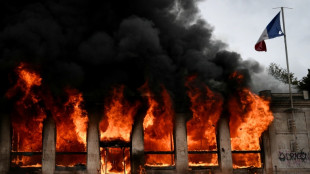
 Town hall in Limoges 'largely lost' to blaze set during French protests
-
El Salvador's Bukele puts conditions on early release of gang prisoners
-
 US goes on the offensive in central Asia
-
Fire rages at town hall in France's Limoges after protests: authorities

-
 Emotional Lions come up short in Champions Cup as tributes paid to Andrews
-
Unstoppable Barca thrash Betis to extend perfect start

-
 Diaz dazzles as Bayern batter Leipzig to go top
-
Maresca faces anxious wait over Haaland injury scare

-
 Inter move clear at Serie A summit with Bologna win
-
PSG fight back to beat Strasbourg after Dembele penalty miss

-
 Liverpool still have 'lots to improve', says match-winner Isak
-
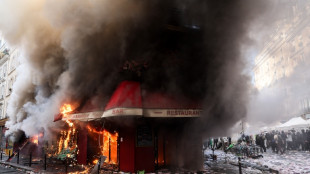
Looting, blazes and clashes in France amid nationwide protests
-
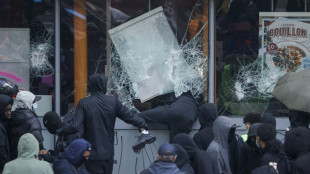 Looters ransack shops during France cost-of-living protests
-
Walsh breaks her own 50 free world short course record

-
 Leinster thump Clermont as grieving Lions set for Champions Cup debut
-
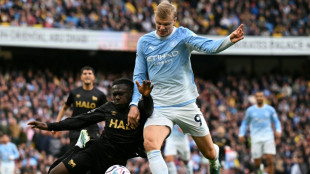
Haaland brace extends Man City's winning start in Premier League
-
 Haaland stars in Man City win, Liverpool beat Brentford
-
'Special' Ombudsman storms to victory in Champion Stakes

-
 Dortmund go top despite Union Berlin stalemate
-
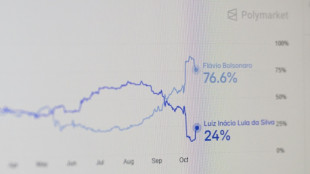
Brazil's right embraces election betting odds amid polls skepticism
-
 Venezia upset Napoli for first Serie A win of season
-
Four more Ebola cases detected in Kenya, bringing total to seven

-
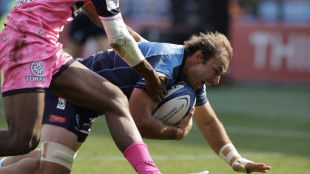 Glasgow and Bulls win as grieving Lions set for Champions Cup debut
-
Clashes erupt in France as protesters vow to make government 'tremble'
-
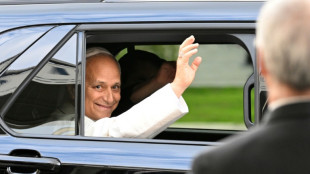 Smiling pope returns to Vatican after cancer surgery
-
Chwalinska downs Swiatek to set up Wuhan final with world number 170 Kartal

-
 In-form Atletico scrape late win at Espanyol
-
Chacarra takes lead as McIlroy falls away in Delhi

-
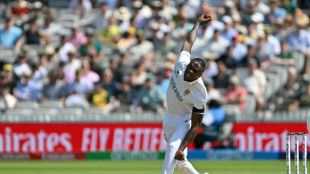 Rabada returns as S.Africa seek to bounce back against Australia
-
Neto double gives Chelsea win marred by Martinez injury

-
 Zverev, Medvedev ousted with Spaniards to clash for Shanghai title
-
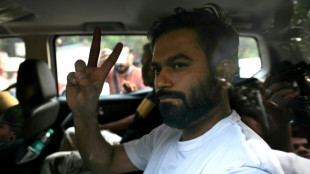
'Cockroach' party founder released from Indian police custody
-
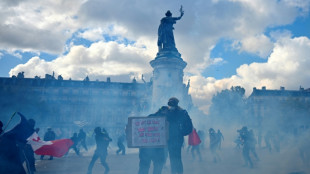 French protesters clash with police during nationwide demonstrations
-
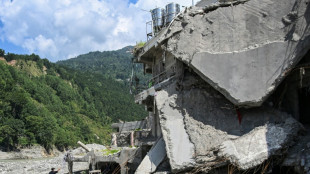
Nepal floods 'defining moment' for climate action: UN
-
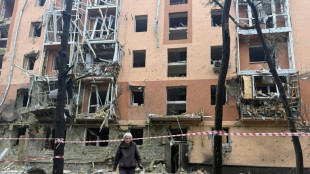 Zelensky says Trump could lift more Russia sanctions
-
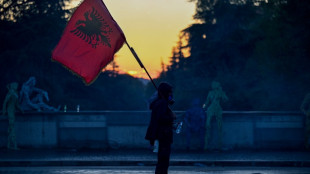
Albanian capital sees fifth straight day of violent clashes
-
 Jayawardene quits as coach of five-time IPL winners Mumbai
-
Leaders weigh 'huge benefit', risks of AI for global economy

-
 World number 170 Kartal battles past Ostapenko to reach Wuhan final
-
Zverev stunned by Davidovich Fokina in Shanghai semi-finals

Tariffs roil U.S.–India ties
A rupture is widening between the world’s largest and oldest democracies, and its shockwaves are already rippling through trade, technology, and security. In Washington, tariffs have become the blunt instrument of choice. In New Delhi, officials weigh retaliation and diversification. Between them lies a relationship strained by economic coercion, immigration politics, and unresolved security grievances.
In early August, the United States announced an additional blanket import tax on Indian goods—on top of existing duties—pushing levies on some exports to levels few partners face. The measure is framed as punishment for India’s continued purchases of Russian crude and as part of a broader “reciprocal” tariff agenda. Whatever the intent, the signal is unmistakable: trade, once the ballast of the partnership, is now a pressure point.
The economic fallout is immediate and visible. Export orders for high-exposure sectors have slowed sharply, and factories in India’s most globally connected clusters report cuts to shifts and payrolls. U.S. buyers, facing higher landed costs, are postponing or cancelling shipments; Indian suppliers, squeezed between thin margins and weak demand, are trimming production. Prices for some U.S. imports are set to climb, with industry groups warning of pass-through effects for consumers.
Immigration, for decades a bridge between the two nations, is becoming another fault line. With new rulemaking floated in Washington, the H-1B program—through which Indian professionals make up the overwhelming majority of skilled visas—is again under the knife. Proposals to favor only the highest wages and public calls to “pause” the program altogether have rattled tech workers and employers alike. That uncertainty threatens one of the most resilient pillars of U.S.–India ties: the human capital pipeline that fuels American innovation and anchors Indian diaspora influence.
Security cooperation, meanwhile, is caught between momentum and mistrust. On one hand, defense-industrial collaboration has never looked more ambitious, with negotiations to co-produce advanced jet engines on Indian soil and a long-horizon framework to deepen interoperability. On the other, a lingering law-enforcement case from late 2024—U.S. prosecutors alleging a foiled plot to assassinate a government critic on American soil—has left scar tissue that resurfaces whenever tensions rise. The two governments say they are working the issue quietly; it still shadows the relationship.
Geopolitically, the timing could hardly be worse. Washington’s stated priority remains balancing China in the Indo-Pacific. Yet coercive tariffs on India, a cornerstone of that strategy, risk pushing New Delhi to hedge—reopening trade channels with Beijing and doubling down on groupings where Washington lacks leverage. Allies from the Pacific to Europe are watching: if tariffs replace diplomacy, informal coalitions like the Quad become harder to sustain.
In New Delhi, policymakers are calibrating their response. India’s energy calculus—discounted Russian crude that helps tame domestic inflation—has not fundamentally changed. Nor has its preference for strategic autonomy. But the costs are rising. If the new U.S. duties take full effect and persist, expect targeted countermeasures, accelerated efforts to localize critical supply chains, and fresh bids to diversify export markets away from an increasingly volatile United States.
For American business, the risks are symmetrical. Tariffs function as a tax on U.S. consumers and a drag on companies that rely on Indian inputs and talent. The more Washington signals unpredictability—on trade, visas, and technology transfers—the more boardrooms will dust off contingency plans: dual sourcing, near-shoring, or shifting investment to jurisdictions with steadier policy.
This is where leadership matters. Wise statecraft distinguishes leverage from self-harm. Diplomacy tests arguments before testing alliances. Foresight weighs tactical wins against strategic drift. When unilateral tariffs and campaign-style messaging substitute for patient negotiation, the costs compound: higher prices at home, weaker coalitions abroad, and partners who conclude that hedging is safer than alignment.
None of this is irreversible. A disciplined off-ramp exists: suspend escalatory tariff tranches pending structured talks; ring-fence high-impact sectors with temporary exemptions; codify a transparent process for visa reform that preserves merit-based mobility; and firewall law-enforcement cases from trade retaliation. Pair that with a clear roadmap on defense co-production and export controls, and the relationship can re-center on mutual interests rather than mutual recriminations.
Something serious is indeed happening between India and the United States. Whether it becomes something truly terrible depends on choices made in the coming weeks. Prudence, diplomacy, and foresight are not luxuries here—they are the strategy.
After Europe’s capitulation
Trump vs Intel: Chip endgame?
Operation Venezuela: Scenario

Can the FANB shield Maduro?

Venezuela braces after Strike

Tokyo’s Housing playbook

Tel Aviv’s Wartime rally

After Kirk: Speech at Risk

Milei suffers crushing Defeat

Why Nepal is burning

Russia's Drone ploy in Poland